For more than 190 years, we at BECHEM have been asking ourselves the same question over and over again: How must lubricants perform tomorrow so that our customers can stay one step ahead today? It’s about making the right decisions at the right time and having the courage to constantly reinvent ourselves. That is precisely what has set BECHEM apart for generations.
I’d like to show you why adaptability isn’t just a buzzword for us—it’s a way of life, both then and now, and certainly tomorrow as well. Join me on a journey from our historical roots to today’s highly specialized solutions.
As CSO, I see every day just how rapidly markets, technologies, and requirements are changing. What makes me particularly proud is that our responses to these changes aren’t based on gut feelings, but on a genuine connection to our customers and their applications. We listen, we ask questions, we continue to innovate—and sometimes we deliberately rethink things from scratch. And we’ve been doing this since 1834.
What began in the 1830s with applications for the young, burgeoning railroad industry became a story of constant reinvention. Mineral oil was still a distant prospect and wasn’t discovered until a good 25 years later. As a result, we supplied plant-based lubricants to the railroad, wire drawing, mining, and steel industries. These sectors were characterized by extreme stresses and demanding conditions. It was precisely there that we learned that lubricants offer the greatest benefit when they are precisely tailored to a specific application. Even back then, the decisive factor was not the raw material, but our commitment to truly solving tribological problems. The philosophy that our founder, Carl Bechem, played a key role in shaping continues to guide us to this day: stay curious, work closely with the applications, and be ready to break new ground.
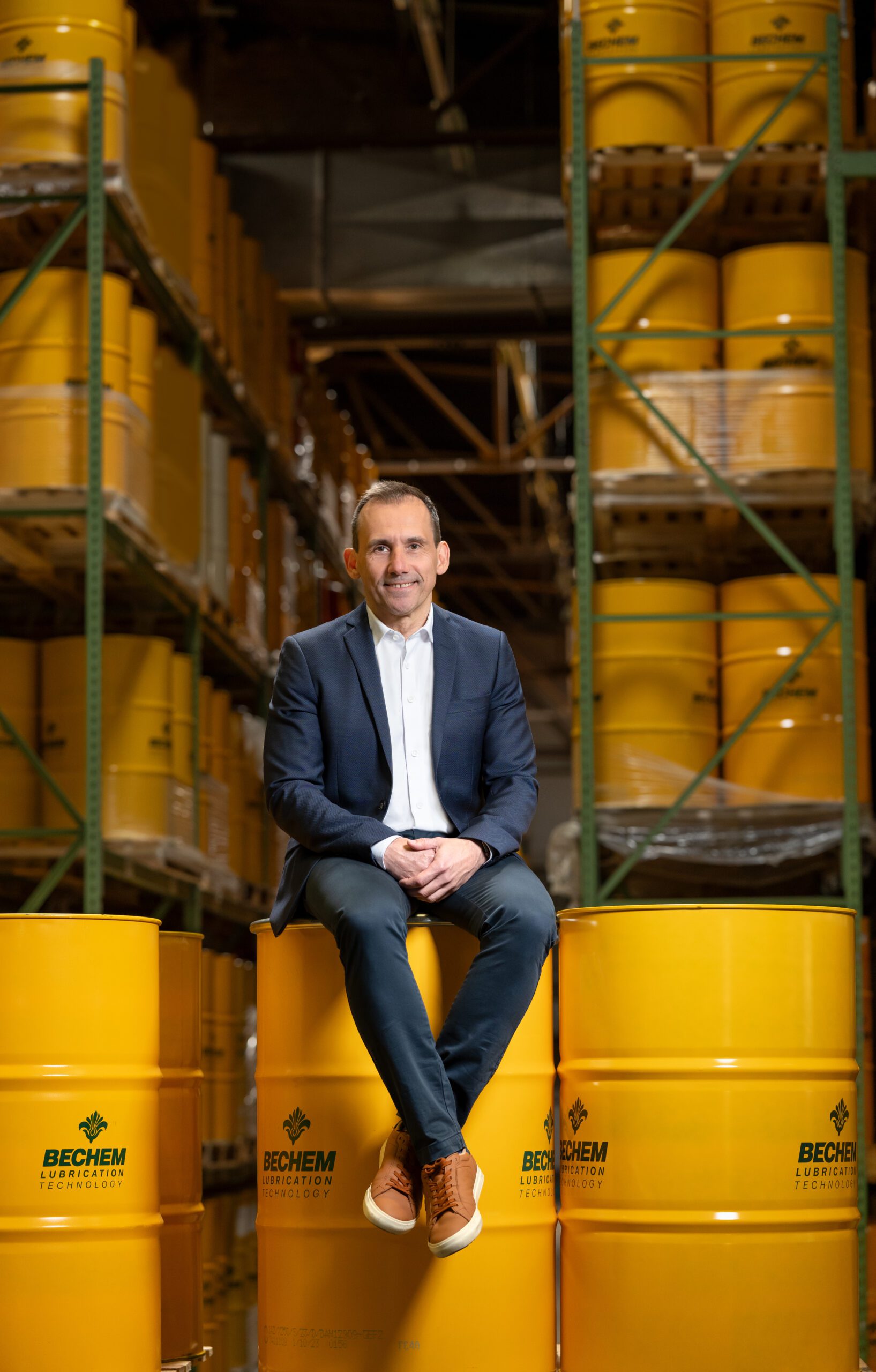
Innovation has never been a project,
but rather part of our DNA
Thomas Brexeler, CSO
We have earned our market leadership positions
A close connection to technology and to the people who develop it has always been a key factor in our success. We realized early on that true innovation does not arise in the laboratory alone. It develops through close collaboration with machine manufacturers, research associations, and our customers’ development departments. These partnerships have repeatedly yielded new solutions that have set new standards—for example, in the steel industry, in wire drawing, and in rolling bearing technology.
It is precisely through our close collaboration with renowned roller bearing manufacturers that we were able to establish ourselves as early as the 19th century in an industry where reliability and service life determine success or failure. That is where we have made a name for ourselves—not as a supplier of “standard greases,” but as a development partner for high-performance, application-specific solutions.
Development Partner to the Automotive Industry
Developments in the automotive industry also demonstrate how important adaptability is and how it has become one of our core competencies. In the early years, engine oils and traditional greases for axle bearings played a major role. However, as these products became standardized, competitive pressure increased significantly. We drew a clear strategic conclusion from this: to move away from the mass market and toward highly specialized applications in vehicles.
Today, we focus on components that typically operate behind the scenes but are of central importance for comfort, safety, and service life—such as small adjustment mechanisms for seats, window regulators, locking systems, sunroofs, and even sensitive electrical contacts. In these areas, lifetime lubrication is required, often under very tight installation conditions and varying environmental influences. Today, we are recognized worldwide as specialists in these highly demanding fields.
At the same time, we recognized early on that requirements in sensitive sectors such as the food industry and the drinking water sector are undergoing fundamental changes. In these sectors, lubricants must not only perform well tribologically but also meet the most stringent regulatory requirements. The fact that we are able to offer a comprehensive product line today is no coincidence. It is the result of consistent development work, close collaboration with our customers, and our commitment to actively helping shape new standards.
Our history also reflects a legacy of technological innovation: from the first urea-based grease for the steel industry in the 1970s, to a completely mineral-oil-free, water-based cooling lubricant, to the introduction of microencapsulation technology in anti-seize compounds. And with our BECHEM Nexus Technology, we are introducing the market’s first solid lubricant solution capable of replacing PTFE. This is further proof that we don’t just react to trends—we help shape them with a visionary approach.
When I look back on our history, I see continuous evolution, driven by technical expertise, close partnerships with our customers, and the courage to venture off the beaten path. For us, adaptability does not mean leaving the past behind. It means using our experience as a foundation to forge new paths.
That is precisely what will continue to be our goal in the future: to find the right tribological solution for every new technical challenge. Reliably, in partnership, and with an eye toward the future.